Showing posts with label sage. Show all posts

Friday, September 8, 2017

Boing!


One of my favourite experiences in our garden is simply to step out into it every morning, to see what's happening. In Spring I'm guaranteed to find something new every day. Just like me, it's alive and breathing (but unlike me it's young and pretty and growing fast). Oh well, I'm happy to settle for "it's great to be alive".

And so here's a photo-driven little posting of just some of the lovely things I found in our garden this morning.


I think we're at "peak native orchid" today. The show has been brewing for a few weeks but this morning all of them are on song. 


Pammy wants me to send her this close-up of a tiny native orchid bloom, taken with the camera about an inch away from the small but perfectly formed bloom. I think she can sense a watercolour painting coming on ...


Speaking of small but perfectly formed blooms, the first of our purple mint bush blooms made an appearance this morning. As I have three bushes and each is covered in flower buds, these are the first wave of what promises to be a few thousand more. Can't wait ...


And to finish off our purple patch, our potted common sage, the kitchen garden herb, has started to do its thing.


Just a few feet from the sage, also growing in a pot, the Thai lime plant is making good use of all the spring fertiliser I fed it with a few weeks ago. The young "double" leaves are the freshest green, every nook and cranny is filled with bum-like blooms and all is good in the fragrant, spicy Thai flavouring department.


A much quieter chap, the Turkish Brown fig looks such a treat as the morning sun shines through its new green leaves every morning. After its winter repotting, I am hoping for good things this summer. No pressure, though ...


Our Westringia 'Elizabeth Bough', covered in light pink blooms, cuddles up close with the astonishingly capable geranium 'Big Red', which flowers pretty much all year round.


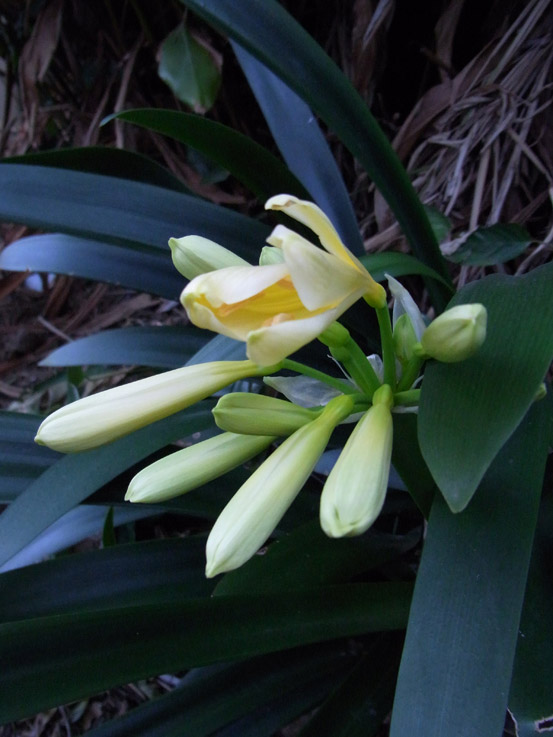
And last of all, in a deep, dark corner of the garden when the sun doesn't get much of a look in, the yellow clivias have decided the time is right. I love how they know this stuff.


Sunday, October 9, 2016

October surprises


Some mornings, I know exactly how daisies feel. It's not enough for the sun's early appearance to turn night into day. What daisies need is to feel the sun's warm, direct rays beating down on their flowers, and then (and only then) will they open up and do their thing. 


Looking like a cluster of mini suns, the "surprise" part of this purple-leafed, yellow-flowered daisy bush is that it's a lettuce plant enjoying its floral fling before signing off on a life well lived, however briefly.


This handsome purple tower was once a low-growing, purple patch of "pick-and-come-again" loose-leaf lettuce, looking much like its green lettuce siblings growing at its feet. Then, two weeks ago, it made its break for adulthood and rose daily, inches at a time. I watered it and gave it a feed to encourage it, and in the last few days it has repaid the favour with its own flower show. Bravo!


In a recent posting on bees I showed you a photo of this shallot flower, but it's so delightful I want to show it again. And it's not alone in this world, either. While I have another mini patch of shallots growing well in another bed, I've very happily watched these shallots doing their flowery thing for the last few weeks. There used to be more of them in fact, but in the last few days both Pammy and I have harvested some from this patch for dinner, and they're still perfectly fine to cook with, but probably getting a bit too strong-flavoured for salads anymore. 


My final little October surprise is this perfectly predictable scene of our common sage bush in bloom. The "surprise" factor is simply that it is flowering so well this year. It was looking utterly rough, scrawny and bedraggled in the middle of winter, so I adopted the simple policy of "cut off all the ugly bits" (and there were a lot of them, too). It seems to have worked. All the healthy wood that was left has burst out in new growth and, in the last few days, created this explosion of mauve good health.


Sage has wonderfully complex flowers, too. With their mouths agape as if singing a long, high note to finish a song, sage flowers remind me of some orchids. 

I have no problems imagining that on other planets, alien life could easily be comprised of flowering plants that talk.


Saturday, October 4, 2014

Just the right amount of oregano


If you like growing herbs, as I most definitely do, I'm sure you will have encountered the minor problem of having too much of a good thing on your hands. That's especially true if all your herbs are growing in the ground, rather than in pots.

When I had my oregano, thyme, sage and rosemary plants growing in the ground, I had far too much oregano, thyme, sage and rosemary, up to 100 times more of each herb than I could ever sensibly use in the kitchen. The benefits, however, were that these herbs were lovely garden citizens. They flowered their heads off, they sent up delicious scents as you brushed past them, and they really didn't need much help from me at all. And they flavoured hundreds and hundreds of delicious meals as well.

But they did take up a lot of space, and in my tiny garden I decided a few years ago that I'd grow all these herbs in pots, and it has proved to be a good move. The same herbs are all still happily here and enjoying the spring sunshine. The oregano in particular looks a treat at the moment. It's just the right amount, one pot-full.

What a pleasing mound of green it is in this wide, shallow pot.
The only thing it's not doing this spring is flowering, and that's
because my oregano plant pays a visit to the barber's shop
four or five times a year, and that clumsy barber called Jamie
cuts off all the flower buds in late winter.
This is what its flowers look like, little pink clusters which pop
up on stalks in late winter and early spring. I took this photo
a few years ago when our oregano was growing in the ground,
spreading like mad and flowering its head off. Back then I
had far too much oregano but it was a delight to have around.
This is another "from the archives" shot of the oregano trying
 to take over the succulent patch, back in its in-ground days.
If you read my most recent posting on sage, I recommended it as a garden plant, and I can easily do the same for oregano. It makes a good, easy-care ground cover provided it's in the sunshine most of the day, and the soil doesn't suffer from sogginess. It'll eventually misbehave, like the stuff pictured above, and will take over neighbouring beds if allowed. However cutting it back isn't an especially tough chore, nor is it needed more than once or twice a year at worst.

In fact, one of my early successes as a "learner gardener" many years ago was the way I slowly "marched" a patch of in-ground oregano from one spot in the garden to another spot a metre or two further away. All I did was cut off the left-hand side of the oregano patch regularly, but I let the right-hand side keep on spreading. After about 12 months the whole patch had "moved" to its new spot. I felt like I was getting there as a gardener with that little selective pruning ploy!

So if you're looking for a ground cover, oregano might do the trick. It's easy to find seedlings in garden centres, but you can also buy seed. In fact my potted oregano patch is seed-grown. I think that's part of the reason it's so lush. There's probably half a dozen plants in that one little pot, and that's a lot of youthful, pent-up energy in there.


Wednesday, October 1, 2014

Sage advice


Good old gardening hunches. There I was several months ago with a gap to fill in the garden, standing in a garden centre looking at a bunch of herbs and other potted lovelies for sale. Which one to choose? That's where the hunch came in handy. 

The spot to be filled was small yet sunny, and it wasn't that far from the place where a culinary sage bush had thrived gorgeously for several years. And there I was staring at a potted seedling of purple sage in the garden centre. Thank goodness I followed my hunch because the purple sage is also thriving now, and this week it has burst into full colour with its combination of blue blooms and purpley-green foliage. A very nice show indeed.


Here it is in close up...
… and standing a few feet further back. So far
it is staying as a smallish thing, no more than
two feet high and wide at the most. Hopefully
it won't get any bigger.
My 'other' sage plant is now limited to a pot,
as it always grew too big and sprawly for the
spot it called home. It was a constant workload
cutting it back to size, and eventually I just
decided to dig it all up, retain one section of
stems with roots and planted that in the pot.
It has been happy there ever since.
The leaves of the common, culinary sage,
(Salvia officinalis) are longer, narrower and
decidedly greener than the purple plant's
foliage. They also seem a bit more fragrant.
The purple one's leaves are shorter and
wider. They have been even more purpley in
colour through their first winter, and they
seem to be greening up as the weather
warms and the flowers appear. I suspect that
is what will happen: it'll green up for summer
then purple-up again in autumn or winter.
It'd be nice if that happened, but I will just
have to wait out my first year with it to
find out.
Anyway, the moral of this blog posting is that if you are looking for a small (well under 1m high and wide) shrub with very nice foliage interest year-round, and a pleasing spring show that has been happening for a couple of weeks already and doesn't look like slowing down any time soon, have a look at purple sage. 

As far as growing tips go, it needs sunshine, soil that drains well and that's about it. Haven't fed it, clipped it, or bothered too much with watering it. It has just looked after itself, but maybe that's just my good luck that sage likes it here. 


Thursday, October 3, 2013

Gone potty over herbs


After my previous blog posting on the new 'Herbs & Spices' book by Don Burke, as well as my own potted herb garden, one of my regular and most thoughtful commenters, Shivangni Sharma, got in touch with me via email (as she usually does) to ask: "Why did you pot up the herbs? I keep lamenting that I don't have ground to plant them! Is it a blessing to be forced to grow in pots?"

It was perfect timing by Shivangni, as that topic was something I was thinking of discussing in my last posting, but as that post was becoming over-long (as usual) I decided to write something next time.

No, it's not a blessing to be forced to grow herbs in pots, Shivangni. The simple reason I have moved my herbs from being planted in the ground, to pots, is lack of space. My in-ground herb plants were so big and vigorous that they were taking up too much space. I wanted to grow more different plants, especially succulents – and Pammy wanted more flowers – and so with our little garden just 9 metres long and 7 metres wide, the beautiful, fragrant herbs were taking up just a bit too much space. Grown in pots, they still provide more than enough flavour in the kitchen, but they let me grow more succulents, and Pam can have more lavenders, tibouchinas, gardenias and other flowers.

The in-ground herbs are beautiful plants, and if I had a bigger garden that's where I'd always grow every one of them - in the ground. But before I say goodbye to my in-ground herbs for a while at least, just one last look back over the shoulder at them...


Here's a perfectly good reason to grow herbs in the ground.
This photo of my former sage plant (now in a pot) is still one
of my favourites. But herein lies the problem. This is enough
sage for a hundred cooks' needs. It's over one metre wide.
I went mad over curly parsley borders. I filled up the blank
space in the middle with lettuce, silver beet and marigolds,
but my real mission here was a curly parsley border.
The thyme became a marvellous monster.
Only the left third of this plant is growing
in soil; the right-side two-thirds of it is
loving the hot life on the pavers. It thinks
it's in the Mediterranean, with its roots in
a patch of dry, crumbly hillside and the
rest of the plant behaving like a sunbathing
tourist, stretching out and sunning itself
on the rocks. Happy days.
Summer's a lovely time for herbs here, such as this combo
of basil behind a curly parsley border, shallots to the left and
a wall of blue-flowering sage in the background.

So, Shivangni, I have made life a bit harder for myself by growing herbs in pots. They are a lot more work in pots, so much easier in the ground. But my garden is small and so the workload is only relatively greater. The space created by removing the sage and the thyme has made my new succulent garden possible, and Pam has more lavender and tibouchina to enjoy. And we still have enough herbs to cook with.

There's only a few tricks to growing herbs in pots. The main one is the same one for growing herbs in the ground. Constant trimming to keep them bushy is the main game. Don't think of yourself as your herbs' gardener. Think of yourself as their barber. Trim herbs whether you need them for cooking or not. All herbs benefit from regular trims.

The second trick is pot feet under pots. Good soil drainage is vital to keep most herbs happy (with the exception of that cunning swamp fox, mint).

I was almost going to write that the third trick is sunshine, but there's enough exceptions to repeal it as a rule. For example, mint likes semi shade, chervil is the same. While parsley loves sunshine it copes remarkably well with only partial sunshine, so too oregano, and tarragon is a bit of a wilter in the hot afternoon sunshine, so giving it some respite from the strongest Aussie sunbeams is a good thing for it. 

Most of the other popular herbs can be called sun-lovers, and if yours are not getting enough sunshine and they're not doing well in your garden, that's the problem!

Finally, if you missed my previous posting on my current gaggle of potted herbs, which prompted Shivangni's question, it's here. That posting was also a thinly disguised plug for this book, pictured below, which I helped to produce, and which is on sale now. It has so much info about herbs and spices, I'll understand if you'll never have to read my blog postings on herbs again! Actually, I won't understand! It's just the kind of nonsense that salespeople say that they don't really mean. But they say it anyway.


Friday, September 27, 2013

Spicing up the herb garden


I've been waiting for a chance to do an update on my herb garden, as it has changed a lot in the last year. The big change is that almost everything is growing in pots now, instead of in the ground. Now is the perfect time for the update for two very good reasons. The first is that it's spring, so everything is growing well and looks nice for photos. 

The second reason is that a new book on herbs and spices, by Don Burke, is going on sale next week, and as I worked behind the scenes helping Don to put the book together, I want to tell you all about it. Pictured below is the book cover, but I'll tell you all about it at the end of this blog post. Before my not-very-amateur burst of rampant commercialism, it's onto my potted herb garden show-and tell.


French tarragon is happy as larry in its new, wider pot,
replanted there during midwinter when it was just a bunch
of snoozing bare roots and runners. It has such a nice
mildly aniseedy flavour that is heaven with chicken, or eggs.

Oregano, grown from seed just on a whim, looking lovely
right now. It was looking straggly about six weeks ago, so
I cut it back all over and now it's at its finest. That's the big
secret with herbs in general, but potted herbs in particular:
cut them back often, a light cut once a month works wonders.
Chives in front, lemon thyme left and sage in flower, right.
The sage is from my original in-the-ground mother plant. I dug
up a section with a rootball and potted that up. It took a while to
bounce back, but it's happy now in its terracotta pot.
Another 'sprog of mum' plant, my common thyme is a roots-
and-all chunk of the former large mother plant, replanted and
doing well in a wide, shallow pot. This is one plant that I
cut back very regularly, to keep it low, dense and bushy.
The rosemary is a cutting grown from the monster size parent,
and I am cruelly trimming it to encourage dense, low growth,
as it can grow to silly sizes if you let it go unchecked. Rosemary
has such a strong flavour you never need much in any dish.
Moist mint is happy mint. I have two pots here, one with common
mint, the other with spearmint, and both need major cutbacks
about three or four times a year. I cut the whole plants down
to pot-rim level, back to just stumps, then give it a good feed.
I love the look of the two pots when they're in their pomp.
I still have a few herbs in the ground, including this chervil,
which I didn't plant here. It turns out that chervil is so happy
here it's behaving like a weed and self-seeding all over the
place. It has a lovely, light aniseedy flavour.
Also in the ground and "on the way out" is this patch of
coriander, which is starting to go to seed as the weather
warms up. The patch has been here for a few months now,
as coriander loves our mild winters the best. That's the
time to grow it here in Sydney. If you grow it in summer,
you'll have to sow, grow and harvest three or four crops
each summer season, as it goes from leafy to seedy in
no time at all during steadily hot summer weather.
That's enough for my own personal update on the herb patch. It's time to show you Don's new book, priced at $29.95 in hardcover, which goes on sale on October 1. It's published by New Holland Publishers, is 304 pages long and has entries on virtually every useful herb and spice you can think of, plus lots that you might not have heard of. Here's the cover.


With only a few exceptions, each herb is covered in what's called a 'double-page-spread' of two open, facing pages. Pam did some of the illustrations used in the book, and my wide-ranging contribution to Don's text goes under the heading of "editorial consultant". Don loves to get down to the practical nitty-gritty of gardening, so he offers tips on how to grow each herb, best varieties, how to harvest and dry or prepare it, then how best to use it in the kitchen. He also quite frankly tells you whether it's worthwhile trying to grow each herb or spice in the garden (as some are hopelessly impractical to grow in backyards while others are dead-easy). 

And Don loves a good debunking of myths, too. This is a no-mumbo-jumbo book! Instead of mindlessly repeating all the ancient myths about herbs and spices being good for curing ague, plague or whatever, he's gone straight to modern scientific research to find out whether each herb really is beneficial or not. (The good news is that many are very useful.) However, this is also where Don's book is full of new, fresh info that might contradict some of the very unscientific mumbo-jumbo that has been long attributed to the healing powers of various herbs and spices. Some traditional 'medicinal' herbs are actually unsafe for human consumption, and several are simply useless. While researching this subject area I was struck by how many herb experts writing their books had unquestioningly just repeated the traditional folk myths about the medicinal benefits of herbs and spices. So I say good on you Don for turning to science for your evidence in this area. I learned a lot at this stage of the project.

And did I tell you it's full of delicious recipes and gorgeous colour photos? And if you like to brew interesting cups of tea we've got the tea brewing recipes for you too.

OK, so I am a bit biased, but it's a new kind of herb and spice book, a deliciously practical one. A few enjoyable months of my working life went into helping Don research and prepare the text for this book, and I am very pleased with how it has turned out. Go check it out if you can. 

I've noticed that while it doesn't 'officially' go on sale until October 1, it's already up and available for pre-order on websites such as Amazon, the ABC Shop site here in Australia, and numerous other book sellers' websites. Just search for 'Herbs & Spices' by Don Burke and you'll find it.


Sunday, May 26, 2013

Green finery


At last, a few days of rain, and again I'm reminded that there's a magic ingredient inside raindrops that good old tap water simply doesn't have. Stepping outside this sunny morning and all the greens were greener, the plants definitely happier, plump with growth. Though late May here is hardly a time for flower shows, it's a wonderful time to appreciate the beauty, complexity and sheer diversity of foliage. And that's what this little Sunday post is all about. Fab foliage.  

Pretty little chervil, a whole pot full of it
looking like a forest for tiny elves to hide inside.

Porky plump English spinach loved all that rain.

Rough as a cat's tongue, silvery sage.

Sandwich-bound this lunchtime, the mixed
salad bowl is a harmony of colours and textures.
The foliage of Florence fennel is wonderfully light and fine,
the garden's best dewdrop catcher every cool autumn morning. 
Back to the chervil, though, it's all coming up
from seed and in the full freshness of youth its
green is so light, the foliage soft yet dense.


Wednesday, October 6, 2010

Star quality


Oh, wow. I expected the Louisiana iris to be nice, but not quite this nice.

It feels a bit like a Royal visit (if I was a monarchist, that is, but I'm not). Movie star. Yes, definitely an A-list movie star. Here, in my backyard!

I know I've shown you photos of my sage plant only recently, but it keeps on getting prettier and more covered in flowers as each day passes. I've never seen it looking this good before, and this plant has been here for several years now.

What the hell, one more pic of it. And this is meant to be just the culinary herb, Salvia officinalis, the 'official' one used by apothecaries (and cooks). As a welcoming committee for our movie star from Louisiana, it couldn't look any better. Of course they're getting on famously, my official blue welcoming committee and the movie star.

Finally, some action with the Nigella, the love-in-a-mist. No 'love' (ie, the flowers) yet, but we're getting a nice green mist developing as each day passes. Can't wait, but I'll have to!


Tuesday, September 28, 2010

Morning bloomshine


I wandered outside this morning, camera in hand, planning to get some more photos of the flowers on my succulents for an upcoming post on them. But I was so distracted, captivated is more like it, by some of the other flowers in bloom now that here I am blogging about them instead.

The star turn right now is Pam's dark-leafed pelargonium. You can barely see the leaves not only because they're so dark but also because of the covering of dazzling pinky-salmon blooms. "It needs repotting" says she who owns the plant, to he who has to keep it happy. Not until if finishes flowering, Pammy, and that won't be for a while.

I blog on so often about the poppy patch that I feel like I must be boring everyone silly, but it's such a source of pleasure here. They've been blooming for months now, and they won't stop for at least another month at least. Here's one that's only minutes from popping, next to a self-sown 'wild' one (these always show up during the last month or so of each poppy season).

Deep inside each poppy bloom is a lolly shop for bees. While bees usually just dab their paws to get some pollen from other blooms, I often see bees actually rolling around in the wide dishes of poppy pollen and covering their whole bodies in fluffy yellow dust. They look like they're in a delirium of pleasure.

Looking into the wild poppy reveals complexity and mystery aplenty.

If it's possible for the sage flowers to look better than they did two days ago, when I last blogged about them, then they do.

Twin throats of sage are ready for insecty visits.

While I'm admiring purpley-blue blooms, I might as well toss in yet another flower of our newish Tibouchina 'Groovy Baby', which started blooming in late autumn and is still at it in early spring. This is a new dwarf tibouchina which grows only 60cm tall, and so far it has been utterly prolific with the flowers, and it has also managed to grow a bit too.

Well, sometime soon I'll finish the photos I need for that succulent flower posting, but as for what to blog about next, I voted with my camera lens. I blame Pam's pelargonium for starting it. It really is dazzling right now. It's a plant she brought back from the Florafest Festival in 2009, and while it looked quite nice back then it has really come into its own this year. That happens with some plants. They take a year or two in their new home before they announce to the world "hey, I like it here."