Showing posts with label thai lime. Show all posts

Friday, September 8, 2017

Boing!


One of my favourite experiences in our garden is simply to step out into it every morning, to see what's happening. In Spring I'm guaranteed to find something new every day. Just like me, it's alive and breathing (but unlike me it's young and pretty and growing fast). Oh well, I'm happy to settle for "it's great to be alive".

And so here's a photo-driven little posting of just some of the lovely things I found in our garden this morning.


I think we're at "peak native orchid" today. The show has been brewing for a few weeks but this morning all of them are on song. 


Pammy wants me to send her this close-up of a tiny native orchid bloom, taken with the camera about an inch away from the small but perfectly formed bloom. I think she can sense a watercolour painting coming on ...


Speaking of small but perfectly formed blooms, the first of our purple mint bush blooms made an appearance this morning. As I have three bushes and each is covered in flower buds, these are the first wave of what promises to be a few thousand more. Can't wait ...


And to finish off our purple patch, our potted common sage, the kitchen garden herb, has started to do its thing.


Just a few feet from the sage, also growing in a pot, the Thai lime plant is making good use of all the spring fertiliser I fed it with a few weeks ago. The young "double" leaves are the freshest green, every nook and cranny is filled with bum-like blooms and all is good in the fragrant, spicy Thai flavouring department.


A much quieter chap, the Turkish Brown fig looks such a treat as the morning sun shines through its new green leaves every morning. After its winter repotting, I am hoping for good things this summer. No pressure, though ...


Our Westringia 'Elizabeth Bough', covered in light pink blooms, cuddles up close with the astonishingly capable geranium 'Big Red', which flowers pretty much all year round.


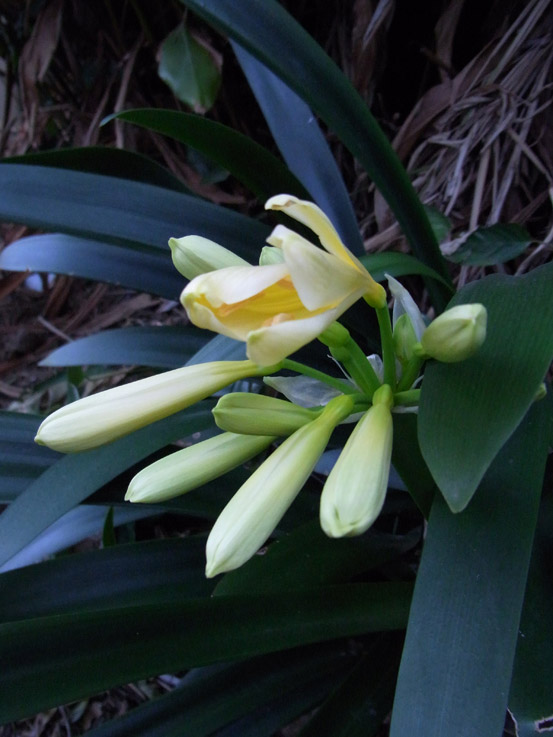
And last of all, in a deep, dark corner of the garden when the sun doesn't get much of a look in, the yellow clivias have decided the time is right. I love how they know this stuff.


Saturday, September 3, 2016

The weeds are winning


To misquote Neil Young somewhat, weeds never sleep. We all know that, and at the end of this cool, wet winter in Sydney, the garden weeds have never been happier. They have been having a wonderfully invasive season. Here in Pammy and Jamie Land, it's the usual suspects: the oxalis, chickweed and onion weed in particular, plus a bunch of other little rotters whose names I still don't know.

As if that is not enough punishment for virtuous artists and gardeners, the real kicker is that some of our beloved own plants have decided to go over to the other side — the dark side — and become weeds. Pictured below is Exhibit A: the chervil that decided to plant itself in our Thai lime pot.


The parent patch of chervil which spawned this tropical runaway (pictured below) is about 20 feet (6 metres) distant. It truly beats me how an errant chervil seed made its way down here and UP(!) into the pot but it's obviously happy and healthy, taking advantage of my generous citrus feeding and watering policies, not to mention the cool, green shade provided by the Thai lime tree. 


This little episode starts to make me wonder if this chervil is normal, old-fashioned chervil. Could it be some lab monster? What makes me think this warped, twisted way is the fact that all this thriving chervil didn't come into the world via a packet of seeds. No, this stuff entered our garden via Woolies supermarket, where I bought a simple punnet of "healthy sprouts" that you're meant to snip into your marvellously healthy salad. Here's a link to that story.


Enough paranoia, let's move on to exhibit B: the maidenhair fern that has gone punk.


Compared to the runaway chervil in the lime tree pot, which at least makes gardening sense in that it chose a nice spot to become a weed, this maidenhair fern-ette has gone the full punk rocker and aspires to be a pathway weed growing out of a crack in the concrete. Call me conservative if you like, but this is just not right!


To set the scene, here's our dreary little side path where the garbage bins live, with the maidenhair "weed" in the foreground and some evil asthma weed (Pellitory) in the background, doing its wheezy worst. 


A full 15 feet (about 4.5 metres) away is the none-too-healthy but still alive parent plant, in its garden bed under the cool shade of one of our murrayas. Now I suspect some of you might think this unhealthy adult is the perfectly appropriate, dishevelled parent of a punk weed, but it is the end of winter, the cold winter winds rushing up our side path can be ferocious, and in another month or two this fern should bounce back to better health once the weather warms up.

While I am trying to confect a little outrage here at the thought that some of my garden lovelies want to become weeds, my real feeling is yet another burst of "ain't nature wonderful?"

Should it turn out at the end of my existence that I get the most almighty surprise and end up at a bunch of pearly gates, my name ticked off the guest list and allowed to enter, I will be making a bee-line for the Head Gardener up there in heaven. While there are so many questions I will have to ask (he/she must get sick of old gardeners bothering them) I will definitely be wanting an explanation of how maidenhair ferns turn into punk pathway weeds. Down here on Earth, I haven't got a clue how it happens.


Monday, August 24, 2015

Rain, the sound of plants growing


Gentle rain, the kindest rain of all. Soaking into the soil without damaging the tender seedlings, or even making the flowers sad. (Edit: well, that was how it was until last night's downpour!) We're into our second day of gentle rain now, after a record midwinter dry spell, and the garden definitely needs every drop it can get.

More usually, after a long dry spell we get pounding rain that brings damage and much needed relief in equal doses. (Edit: talk about speaking too soon ... the more usual pounding, damaging rain arrived last night.) I originally wished a special thankyou to Huey for this lovely, gentle, nurturing rain, but in this re-edited posting, it's "thanks Huey for the rain, but you can back off now".  

Anyway, it's good to have the rains arrive, so here's a quick lap of our garden, camera in hand.


Still bare, our frangipani is wearing strings of these watery jewels now.

Poppies never cope well with rain, but today they're just
drooping their heads a little. They'll look up when the sun
breaks out.

Rosemary in bloom with vivid green new growth, too.

A week away from full flowering, the scadoxus are already
glowing like beacons, and opening rapidly now there's rain.

Aeonium 'Schwartzkopf' looks like it's trying to resist getting wet. 

While in a dark, shady corner this Vriesia
bromeliad is putting on a colour party.

The foodies are loving it. Lettuce planted less than a week ago.

Potato babies growing noticeably every day.

Thai limes were fertilised on the weekend, and with this steady
watering they'll be flowering and fruiting through summer.
As I've mentioned before, I am so glad the roof over the rear part of our house is galvanised iron. There's nothing more pleasing to this gardener than enjoying breakfast, fresh mug of coffee to start the day, listening to the sound of rain on a tin roof.


Saturday, August 31, 2013

Spring started weeks ago!


One of the fortunate things about my new life as an erratically employed freelancer is that I get more time off to do gardening, whether I want the time off or not! The pay is lousy but the lifestyle is terrific. As a result, my garden looks rather tidy at the moment. As the heading for this post says, spring started weeks ago, so this posting is nothing more than a wander around my happy and unusually tidy spring garden. 

For me, this light, fresh green is the true colour
of spring. In this case it's the top leaves of my
potted Turkish Brown fig.
Flowers do announce the new season nicely, and our potted native
orchids are producing sprays of these tiny, fragrant little blooms.
Small but perfectly formed orchids less than an inch across
from side to side, the other nice thing about them, speaking
as a gardener, is that they are very easy to grow.
Our two lavender bushes have been blooming
their heads off for a month, the bees love them
and they aren't looking like slowing down any
time soon. I've added its fellow Mediterranean
classic, the rosemary, to keep them company.
Wet weather can truncate the show of the superb
scadoxus, but with hardly a drop for the last few
weeks they're putting on their best show ever.
Our self-sown strawberry patch (which came
up out of some compost spread in this spot) is
still rudely healthy. Its spot is a bit too shady
in winter so it's content to snooze then, but now
the amount of sunshine it's getting is growing
daily it is flowering (with liquid feeds from me
to help the cause) and the first fruits are forming.
The end of winter is one of the two times of the
year when my in-ground citrus are fed, and a
week ago our garden was resplendent with the
heady aroma of chicken poo. Now the Eureka
lemon is flowering its head off quite fragrantly. 
Our potted Thai lime is clapping on a lot of
deep maroon new growth, but as it's in a pot I
feed it lightly once a month, unlike the other
citrus trees growing here.
I sometimes channel a bit of Basil Fawlty when
I am yet again caring for my potted mint, as
what mint needs "is a damned good thrashing".
What I mean by that is mint needs constant
taming and cutting back, sometimes all the way
down to pot-rim level. I did that for the
umpteenth time about three weeks ago, and
since then with regular watering and liquid
feeds, it has bounced back nicely yet again.
It's a high-maintenance herb, mint, but it
does look and smell lovely in these peak times.

I'm not going to say too much about the passionfruit vine
trained on my neighbour's garage wall, other than to report
that it's ludicrously lush and green, and has no flowers and
is doing sod-all in the way of producing fruit yet.
The small gaggle of garlic plants raised from
sprouted supermarket cloves is growing on well.
I told you the garden looks neat and well mulched at the moment.
I pulled out the winter crop, dug it all over as usual, then planted
seedlings of lettuce, basil and chillies, along with pretty little French
 marigolds for some colour. The round bare patch on the right
rear is where I am raising Collard greens direct-sown from seeds.
The Collard greens came with the Soulicious eBook cookbook 
Pam and I bought from our friend Awia Markey.
New plants have been added recently, too.
This row of four Gardenia magnifica should
grow to about 2m tall and cover up that
white Colorbond fence. I am hoping for dense
glossy green growth, white fragrant flowers
in summer and no problems, please!
And finally, if it all grows too big and everything
gets out of hand – start again! That's what we
are doing with a potted bay tree. Our last one
was here for ages but grew too big, then became
pot-bound then got sick and ugly. All my fault.
So here is "Son of Bay", my attempt to make
amends for all my bay-tree growing mistakes
perpetrated over the last 20 years. Whether I find
redemption or not remains to be seen, but I do
like adding just a touch of epic theme to
gardening here. It puts things in perspective.


Monday, December 3, 2012

Dripping wet


Lovely sound, gentle rain on a tin roof. And the changes a bit of morning rain brings to the garden are so tempting. No matter how much it rains, I just have to go out there and soak it up (the imagery, not the water). One delightful thing that rain does to the garden is that some plants actually look their best when they're wet, such as this weeping Acacia cognata, pictured below.

Though this is a wattle it doesn't flower in a
wattley way. It's a foliage plant that has come
into vogue in recent years, but it's a tricky
thing to keep happy in humid Sydney.
Somehow mine has survived (maybe that's
because it's one of "Pam's plants" of which
there are several here in the garden). When it
rains it becomes sparkly with raindrops held
in place against the laws of gravity.

You'd never notice this tiny spider web on top of the Acacia
when it's dry, but in this morning's rain it's a foam of rain bubbles.
I was almost going to leave my morning's posting on raindrops at simply admiring the lovely little weepy Acacia, but with little pocket camera in hand, everywhere I turned there was something which looked a bit lovelier in the rain. So here's a few more...


Looking almost waterproof, Sedum 'Autumn Joy'.

This other succulent sedum looks as if someone has hit the
'pause' button. Raindrops which should be sliding down the
smooth sides just hang onto the side as if they're blobs of glue.

Still green and young, these will grow up to
become Turkish Brown Figs one day.

I think the PestOil which I sprayed onto my Thai makrut lime
leaves (to deter aphids and citrus leaf miner) has played a hand
in making these leaves so water-repellent.

And lettuce always looks more delicious in the rain.
It hasn't really rained here enough during spring, so the garden needs a good drink. No matter how well I attempt to water all the plants here during the dry periods, they always prefer a drink from the heavens rather from the end of a hose. There's magic in rainwater: if you go outside in the rain, sometimes you can see it.


Saturday, April 2, 2011

Thai lime time


Pammy came home yesterday with a lovely present from her old friend Antonio – these amazing looking Thai 'kaffir lime' fruits. Antonio and his wife Louise live just around the corner from us and they've become keen, and very good, gardeners in recent years. Antonio has always been a brilliant cook long before he became a qualified chef in recent years, and so they love to grow their food plants: citrus and herbs in particular. And haven't they done a wonderful job with their Thai limes!

These limes are not so hot for squeezing. Juiciness is not their thing. Instead, it's the fragrant skin which you grate or zest which is what's valued with this wrinkled fruit. It's also really the foliage of the plant which is what most cooks use from this tree most of the time. The leaves are finely shredded and added to salads, soups, stir-fries and dressings, and they really are one of the signature flavours of Thai cuisine, right up there with fish sauce, chillies and smelly old shrimp paste.

I had always intended to buy a Thai lime tree to grow in a pot, as a few years back I nursed back to health my sister-in-law Laura's potted Thai lime tree, which had endured a bad winter on a shady apartment balcony and had been turned into bare (but thorny) sticks. In my sunny backyard, with some TLC it bounced back beautifully and returned to live with Laura once more. Antonio's gift of these fruit spurred us into action, and so this morning Pammy and I went to a big, flash garden centre in northern Sydney and picked one out from the good selection there.

Here it is, just a tiddler now, but that's how I like to start with potted fruit trees: not too big, so they haven't become pot-bound and unhappy at the garden centre. This one was $35, but you could buy advanced Thai lime trees there, with fruit on, for $200, if you were silly enough. Thai limes (Cistrus hystrix) are probably one of the best potted citrus, as the tree is naturally small, only 1-1.5m tall at best. Its only drawback is that it's a thorny thing, but if you harvest either fruit or foliage with both care and respect you should survive unscathed.

And for readers not familiar with Thai limes, here are their wonderfully distinctive leaves. They are called 'waisted' leaves, as they look like two leaves but in fact are one, with a 'waist' in the middle. I always have Thai lime leaves on hand in my kitchen, but that's only because they freeze brilliantly well, and thaw out in less than a minute. So, I buy them fresh at the local Asian stores, and put the unused ones in a Tupperware container and freeze them. Maybe that 'frozen' discovery is what has made me a bit slow to get my own supply of fresh leaves. But when I saw Antonio and Louise's glorious fruit, that was it. No more procrastination, boy. Buy a Thai lime tree this Saturday, you slacker!

Speaking of slackers, this is what I fully intended to buy and plant this time last year: an edible fig tree, destined for a large pot. So, today we also bought a 'Brown Turkey' fig.
Tomorrow is planting day, and then we wait. The figs have finished fruiting in Sydney (or are winding down over autumn) and they'll be bare over the winter. That first shoot of spring will be a thrill, and it's almost odds-on that eagle-eyed Pammy, who doesn't miss a thing out in our backyard, will be the one to come bounding in with that "guess what I spotted" gleam in her eyes.

As for the Thai limes, we fully expect our latest addition to get growing straight away and never look back. However, we'll have to wait till this time next year for the first of those wrinkly wonders to be ready for zesting.


Sunday, November 2, 2008

Squeezing a lime


Garden science has overtaken me somewhat. These days growers are producing an astonishing array of dwarf fruit trees which are around half the height of the regular trees, yet they produce full-sized fruit. Long before I had ever heard of dwarf fruit trees, about seven years ago, I decided to squeeze a Tahiti lime tree into my little backyard the old-fashioned way – by turning it into an espalier.

I could have succumbed to the nervous virgin's lament of "I've never done this kind of thing before" and chickened out, but instead I just plunged in like a enthusiastic foolish boy, telling myself that it's the long list of things that you regret not doing that will bug you more in your old age than the long list of things that you regret doing. Espaliers, ho!

Before I grind you through cyberspace with all the nitty gritty detail of espaliers on a limited budget, this photo is the 'happily ever after' shot of a contented espaliered lime tree producing yet another season's crop of margarita juice and guacamole cream. (The stripey leaf behind belongs to a 'Bengal Tiger' canna lily, by the way.)

Here's the result after seven years. If I never move from here it might also be my last espalier, but it has worked out fairly well and wasn't that difficult to do. The main thing is to take time picking the right plant in the first place. What I did was simply sort through all the 20-or-so Tahiti limes for sale at the local large garden centre until I found one with three evenly spaced 'pairs' of branches aligned opposite each other up the main trunk. (Yes, a few people gave me strange looks at the time, but don't even think of trying to explain what you're doing. It's not worth it!). Once I got the chosen one home, set up the espalier frame and planted the baby tree, I cut off all the branches that weren't part of my sets of pairs. All of a sudden it looked like a small but perfectly formed espalier, almost from day one. Well, all right, a small and rather puny espalier, if you must.


For the uprights I used two tall metal fence posts designed for swimming pool fences. After concreting the two posts into the soil (allow about one-third of their length below ground, and two-thirds above ground), getting them nicely vertical with a spirit level and letting the concrete dry for a day, I braced the uprights with a small primed and painted timber cross-beam at the top. The 'tie' pictured here holding the tree in place is adjustable and is quite loose. It needs to be checked every six months or so (say, in mid spring and late summer).

For the lower cross-supports I chose good old galvanised clothes line wire. It isn't ageing much, is mostly not visible and is way cheaper than the admittedly superior and more expensive alternative, stainless steel wire.

At the other end the wires are tensioned up with adjustable turnbuckles, but over these seven years they haven't slacked much at all and I can't remember the last time I tightened them. The hardwood brace at the top is essential, by the way. If you don't have it, the tensioning of the lower wire rungs will tend to bend the metal posts inwards.

Adjustable Velcro ties connect the growing branches to the wires. These are the seven-year-old originals which have been out in all weathers and yet still unzip and zip with a pleasing, efficient swish every time. A truly useful garden tie, these guys.

The only trimming needed is to remove growth that is going in the wrong direction (ie, outwards from the espalier, instead of along the espalier's 'lines'). This trimming keeps the profile of the plant fairly 'flat' and is only necessary about twice a year (spring and late summer). The tree itself is healthy and produces good crops, although in the first two years it dropped almost all its baby fruits when scorching hot spring days surprised us all, as they usually do. These days I have learned to thin the baby fruit by half as soon as they have formed, and I'm probably more diligent about watering the tree, too. However, I suspect the tree itself has just grown more roots and should really take most of the credit for its good performance!

In the end I'm happier with the espalier than I would have been with a dwarf tree mostly because of the satisfaction of trying something supposedly difficult, such as an espalier, and succeeding. But deep down I feel the real satisfaction is simply discovering that it's actually easier than it looks, and spreading the word! When I size up the ultimate size of a dwarf tree, I think my espalier is smaller and takes up less space, which is why I chose that method. Sure, it will need trimming for the rest of my days if it is to stay small, but right now that isn't an issue. And it produces more limes than we can squeeze, anyway!