Showing posts with label herbs in pots. Show all posts

Monday, October 9, 2017

The trouble with pots


The trouble I have with pots is that I wax and wane in my use of them. My garden seems to go through cycles ranging from "sorry, we need minimal pots" to "more pots please" ... and right now, I'm swinging back to using more pots.

I have only made this situation worse because last weekend I tidied up my spare pots area, for the simple reason that this unsightly spot used to be hidden from view. Alas, recent garden renovations have removed the dense screen of ginger plants that concealed the pots, and so now my pots area is neatly sorted into sizes and types. 


That's where the troubled brewed up. For example, as I stacked the wide, shallow dish-shaped pots, I thought to myself that they really could contain all the mixed leafy salad greens that two little people could need. Removing the greens from the vegie beds into the pots would then provide more space for my preference — other vegies — or Pammy's preference — more flowers.

The trouble with that idea is that I bought that same wide, shallow pot several years ago precisely to grow more salad greens. I did it successfully for a few years, but it was a lot more work than simply plonking the salad green seedlings or seeds into a garden bed.

And that's the trouble with pots. They seem like a gardener's best friend, a real problem-solver ... but then a few months later you realise that they are more work. They need more watering, more feeding and every second year or so, complete repotting.

Has this deterred me from entering a new cycle of "more pots please"? No, afraid not. 

And no, it's not a tragic cycle. You see, I have more time on my hands now that I am winding down into a semi-retired pattern of work. Several years ago I was much busier, and staying on top of the workload of keeping potted plants happy was more of a chore.

Despite the fact that I seem to be a remarkably slow learner at times, as I am now entering a positive "you can do it" phase with pots, here are several perfectly good reasons to grow plants in pots.


Limit the size of spreading plants. In this case, it's a pot containing all the oregano we will ever need. In a garden bed, oregano can spread a metre or more if it's happy. Here in the pot it has to be content with 30cm. All I need to do is cut it back every three months. Another truly rotten spreader is mint, which you should never grow in the ground if you have limited space. 


Keep fruit trees down to a manageable size. Our potted Turkish Brown fig tree is content in its pot, and so is its close neighbour, a potted Thai lime tree. In the ground, both would grow much bigger, and our garden already has an olive, a Tahitian lime and a Eureka lemon in the ground, so there is no more room.


Put kitchen garden herbs within easy reach. You can almost smell this fragrant forest of young basil, and as well as using leaves for staples such as tomato sauces or pesto, just a few torn leaves tossed into a garden salad works wonders. Other nearby pots contain mint, tarragon, chives, thyme, rosemary and sage.


Grow specialised plants in potting mixes designed for them. Our garden has all sorts of interesting plants, such as this colourful succulent, Crassula 'Campfire', planted into pots containing potting mixes designed to suit them. As well as succulents, there are bromeliads, orchids and water-loving Louisiana iris. Each requires its own special mix, but if you give plants the exact conditions they love to grow in, they tend to be much happier and easier to look after.  

And so all I really have to offer with this posting is that pots are an essential part of any garden. Their downside is that they are more work, but their upside is that they can solve all sorts of problems, and even allow you to grow a much wider variety of plants than if you just tried to grow everything in the ground. And for a plant-lover like me, that final point seals the deal.

I'll be growing plants in pots for all my days here. It's just that every now and then I'll scale back on them for a while, then I'll bounce back a year or two later filled with fresh enthusiasm for them. 

This waxing and waning, of de-potting then re-potting, is just another of life's and gardening's steady little cycles.



Saturday, November 8, 2014

Splashing out on herbs


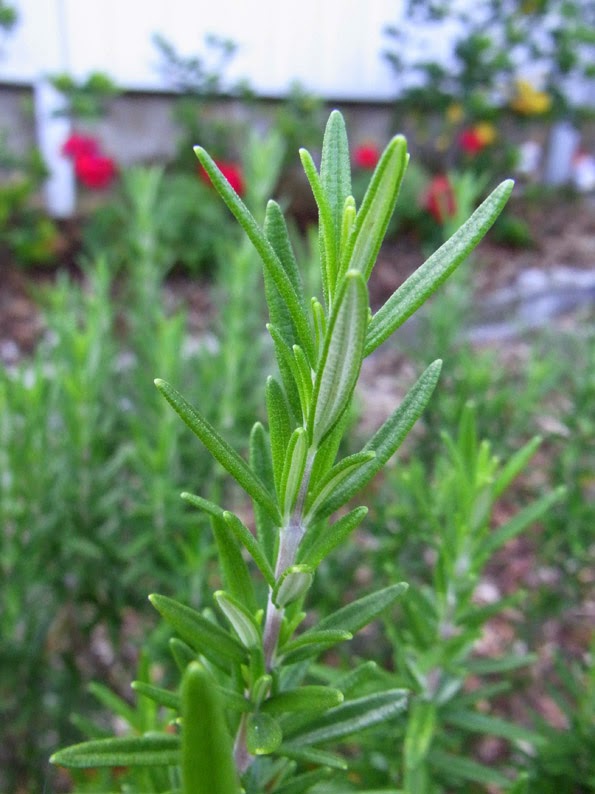
It's amazing what a difference a pot can make to a plant's personality. In the case of my traditional 'Mediterranean' herbs such as rosemary, thyme, oregano and bay leaf, they have turned out to be very different plants to care for, compared to how they grow in ordinary garden soil. Yes, of course they need more maintenance in a pot, but I am surprised how thirsty they are. They all love a drink (well, at least in springtime they do).

Let's put this discovery another way. Since I have started watering these potted herbs a lot more often than I ever did in previous years, they are much happier. And yes, I am slow on the uptake sometimes. (Just ask Pam!) 


Much happier now that it is being watered
every morning, the rosemary is lush, deep
green and very fragrant to be around.
As I water the rosemary now, I can smell its 
sharp scent wafting around in the air.

Same goes for my potted bay tree. More water
this season has produced more growth, and
much nicer looking foliage. 
The thyme is flowering its head off at the moment. It needs the
most clipping to stay bushy, plus, you guessed it, water.
I've already done a blog posting recently on this potted oregano
patch, but it needs lots of watering as well.
Though hardly classic Mediterranean herbs,
the two pots of mint (common mint in the
foreground and basil mint behind) lap up the
water like a pair of thirsty hounds. 
When I grew rosemary, oregano and thyme in the ground I never watered them. Sydney's relatively abundant rainfall took care of all their needs for many years. And so I always thought of them as almost drought-proof and definitely not thirsty. I knew that transferring them to a pot would mean I'd have to water them more often, but I have, until now, underestimated how much water they need.

And so, Aussie gardeners, if your potted Mediterranean herbs aren't looking too terrific this spring, think about giving them more water more often. It might be what they desperately need. 

I'm not sure what they want once summer comes around, but my new hunch is that it will be more water than I gave them last summer...


Thursday, October 3, 2013

Gone potty over herbs


After my previous blog posting on the new 'Herbs & Spices' book by Don Burke, as well as my own potted herb garden, one of my regular and most thoughtful commenters, Shivangni Sharma, got in touch with me via email (as she usually does) to ask: "Why did you pot up the herbs? I keep lamenting that I don't have ground to plant them! Is it a blessing to be forced to grow in pots?"

It was perfect timing by Shivangni, as that topic was something I was thinking of discussing in my last posting, but as that post was becoming over-long (as usual) I decided to write something next time.

No, it's not a blessing to be forced to grow herbs in pots, Shivangni. The simple reason I have moved my herbs from being planted in the ground, to pots, is lack of space. My in-ground herb plants were so big and vigorous that they were taking up too much space. I wanted to grow more different plants, especially succulents – and Pammy wanted more flowers – and so with our little garden just 9 metres long and 7 metres wide, the beautiful, fragrant herbs were taking up just a bit too much space. Grown in pots, they still provide more than enough flavour in the kitchen, but they let me grow more succulents, and Pam can have more lavenders, tibouchinas, gardenias and other flowers.

The in-ground herbs are beautiful plants, and if I had a bigger garden that's where I'd always grow every one of them - in the ground. But before I say goodbye to my in-ground herbs for a while at least, just one last look back over the shoulder at them...


Here's a perfectly good reason to grow herbs in the ground.
This photo of my former sage plant (now in a pot) is still one
of my favourites. But herein lies the problem. This is enough
sage for a hundred cooks' needs. It's over one metre wide.
I went mad over curly parsley borders. I filled up the blank
space in the middle with lettuce, silver beet and marigolds,
but my real mission here was a curly parsley border.
The thyme became a marvellous monster.
Only the left third of this plant is growing
in soil; the right-side two-thirds of it is
loving the hot life on the pavers. It thinks
it's in the Mediterranean, with its roots in
a patch of dry, crumbly hillside and the
rest of the plant behaving like a sunbathing
tourist, stretching out and sunning itself
on the rocks. Happy days.
Summer's a lovely time for herbs here, such as this combo
of basil behind a curly parsley border, shallots to the left and
a wall of blue-flowering sage in the background.

So, Shivangni, I have made life a bit harder for myself by growing herbs in pots. They are a lot more work in pots, so much easier in the ground. But my garden is small and so the workload is only relatively greater. The space created by removing the sage and the thyme has made my new succulent garden possible, and Pam has more lavender and tibouchina to enjoy. And we still have enough herbs to cook with.

There's only a few tricks to growing herbs in pots. The main one is the same one for growing herbs in the ground. Constant trimming to keep them bushy is the main game. Don't think of yourself as your herbs' gardener. Think of yourself as their barber. Trim herbs whether you need them for cooking or not. All herbs benefit from regular trims.

The second trick is pot feet under pots. Good soil drainage is vital to keep most herbs happy (with the exception of that cunning swamp fox, mint).

I was almost going to write that the third trick is sunshine, but there's enough exceptions to repeal it as a rule. For example, mint likes semi shade, chervil is the same. While parsley loves sunshine it copes remarkably well with only partial sunshine, so too oregano, and tarragon is a bit of a wilter in the hot afternoon sunshine, so giving it some respite from the strongest Aussie sunbeams is a good thing for it. 

Most of the other popular herbs can be called sun-lovers, and if yours are not getting enough sunshine and they're not doing well in your garden, that's the problem!

Finally, if you missed my previous posting on my current gaggle of potted herbs, which prompted Shivangni's question, it's here. That posting was also a thinly disguised plug for this book, pictured below, which I helped to produce, and which is on sale now. It has so much info about herbs and spices, I'll understand if you'll never have to read my blog postings on herbs again! Actually, I won't understand! It's just the kind of nonsense that salespeople say that they don't really mean. But they say it anyway.


Friday, September 27, 2013

Spicing up the herb garden


I've been waiting for a chance to do an update on my herb garden, as it has changed a lot in the last year. The big change is that almost everything is growing in pots now, instead of in the ground. Now is the perfect time for the update for two very good reasons. The first is that it's spring, so everything is growing well and looks nice for photos. 

The second reason is that a new book on herbs and spices, by Don Burke, is going on sale next week, and as I worked behind the scenes helping Don to put the book together, I want to tell you all about it. Pictured below is the book cover, but I'll tell you all about it at the end of this blog post. Before my not-very-amateur burst of rampant commercialism, it's onto my potted herb garden show-and tell.


French tarragon is happy as larry in its new, wider pot,
replanted there during midwinter when it was just a bunch
of snoozing bare roots and runners. It has such a nice
mildly aniseedy flavour that is heaven with chicken, or eggs.

Oregano, grown from seed just on a whim, looking lovely
right now. It was looking straggly about six weeks ago, so
I cut it back all over and now it's at its finest. That's the big
secret with herbs in general, but potted herbs in particular:
cut them back often, a light cut once a month works wonders.
Chives in front, lemon thyme left and sage in flower, right.
The sage is from my original in-the-ground mother plant. I dug
up a section with a rootball and potted that up. It took a while to
bounce back, but it's happy now in its terracotta pot.
Another 'sprog of mum' plant, my common thyme is a roots-
and-all chunk of the former large mother plant, replanted and
doing well in a wide, shallow pot. This is one plant that I
cut back very regularly, to keep it low, dense and bushy.
The rosemary is a cutting grown from the monster size parent,
and I am cruelly trimming it to encourage dense, low growth,
as it can grow to silly sizes if you let it go unchecked. Rosemary
has such a strong flavour you never need much in any dish.
Moist mint is happy mint. I have two pots here, one with common
mint, the other with spearmint, and both need major cutbacks
about three or four times a year. I cut the whole plants down
to pot-rim level, back to just stumps, then give it a good feed.
I love the look of the two pots when they're in their pomp.
I still have a few herbs in the ground, including this chervil,
which I didn't plant here. It turns out that chervil is so happy
here it's behaving like a weed and self-seeding all over the
place. It has a lovely, light aniseedy flavour.
Also in the ground and "on the way out" is this patch of
coriander, which is starting to go to seed as the weather
warms up. The patch has been here for a few months now,
as coriander loves our mild winters the best. That's the
time to grow it here in Sydney. If you grow it in summer,
you'll have to sow, grow and harvest three or four crops
each summer season, as it goes from leafy to seedy in
no time at all during steadily hot summer weather.
That's enough for my own personal update on the herb patch. It's time to show you Don's new book, priced at $29.95 in hardcover, which goes on sale on October 1. It's published by New Holland Publishers, is 304 pages long and has entries on virtually every useful herb and spice you can think of, plus lots that you might not have heard of. Here's the cover.


With only a few exceptions, each herb is covered in what's called a 'double-page-spread' of two open, facing pages. Pam did some of the illustrations used in the book, and my wide-ranging contribution to Don's text goes under the heading of "editorial consultant". Don loves to get down to the practical nitty-gritty of gardening, so he offers tips on how to grow each herb, best varieties, how to harvest and dry or prepare it, then how best to use it in the kitchen. He also quite frankly tells you whether it's worthwhile trying to grow each herb or spice in the garden (as some are hopelessly impractical to grow in backyards while others are dead-easy). 

And Don loves a good debunking of myths, too. This is a no-mumbo-jumbo book! Instead of mindlessly repeating all the ancient myths about herbs and spices being good for curing ague, plague or whatever, he's gone straight to modern scientific research to find out whether each herb really is beneficial or not. (The good news is that many are very useful.) However, this is also where Don's book is full of new, fresh info that might contradict some of the very unscientific mumbo-jumbo that has been long attributed to the healing powers of various herbs and spices. Some traditional 'medicinal' herbs are actually unsafe for human consumption, and several are simply useless. While researching this subject area I was struck by how many herb experts writing their books had unquestioningly just repeated the traditional folk myths about the medicinal benefits of herbs and spices. So I say good on you Don for turning to science for your evidence in this area. I learned a lot at this stage of the project.

And did I tell you it's full of delicious recipes and gorgeous colour photos? And if you like to brew interesting cups of tea we've got the tea brewing recipes for you too.

OK, so I am a bit biased, but it's a new kind of herb and spice book, a deliciously practical one. A few enjoyable months of my working life went into helping Don research and prepare the text for this book, and I am very pleased with how it has turned out. Go check it out if you can. 

I've noticed that while it doesn't 'officially' go on sale until October 1, it's already up and available for pre-order on websites such as Amazon, the ABC Shop site here in Australia, and numerous other book sellers' websites. Just search for 'Herbs & Spices' by Don Burke and you'll find it.