Showing posts with label seedlings. Show all posts

Sunday, September 24, 2017

Small starts


Last week, for just a few moments I almost succumbed to a ridiculous thought, but common sense intervened and I changed my mind. 

What was the ridiculous thought? I momentarily felt guilty about starting off some new crops from seedlings, and for just a minute or two headed for the seed stands at the garden centre, instead of wandering outdoors to where all the seedlings were.

Fortunately, a cluster of sensible brain cells rallied and told me to stop being a fool, go buy those nice, healthy seedlings and save yourself four weeks of fussing over seeds in punnets. And that's what I did. I bought a punnet of four Lebanese zucchini seedlings, and a punnet of four Lebanese cucumber seedlings. And now they're planted and they look great.

Growing crops from seed is fun, but you should never feel it is compulsory. I enjoy doing it partly because of the pleasure of growing something from seed, and also partly because the only way to grow rare or unusual varieties is to start them from seed. Your basic average garden centre has an extremely limited range of seedling varieties to choose from, while an Internet full of online seed catalogues has hundreds, sometimes thousands, more seeds to choose from.

Fortunately for me, I like the smaller, light green Lebanese zucchini very much, and there was a perfectly healthy punnet of four of the things just begging to be planted. As many people like to say these days, it was a no-brainer.

Planted 60cm apart into soil enriched with compost and chicken poo. A layer of mulch, some seaweed solution to water them in, and the job was done in no time.


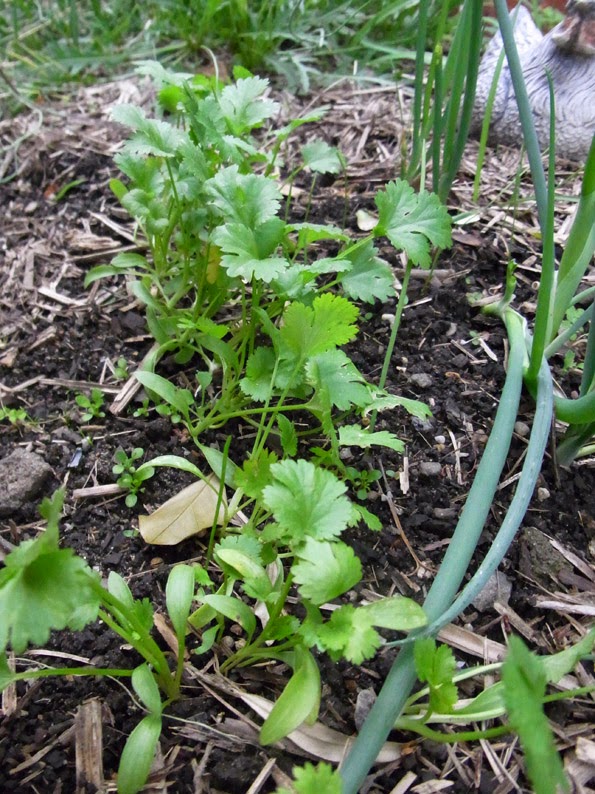
However, the next photo shows a bunch of baby seeds coming up, and that's because this is the best way to grow some plants. This one is yet another crop of chervil, a delicate herb that looks a bit like downsized parsley, with a lightly aniseedy flavour that goes beautifully with vegetables such as zucchini.

Chervil is a relative of parsley, and like parsley it prefers to start life in the garden as a seed sown directly where it will spend its life. Chervil, parsley and several other common vegie and herb crops absolutely hate being transplanted from a starter pot to the ground. It can be done, and is regularly done, but the plants are rarely happy about it.

Speaking of plants which are related to each other, this Lebanese cucumber seedling does look remarkably similar to the zucchini seedling at the top of this page, and that's because both plants are cucurbits. There are almost a thousand cucurbit species, and the best known other cucurbits to ordinary gardeners are all the pumpkins, melons and gourds. 

Cucumbers like to twine and climb, so I have used five slender bamboo stakes to form a teepee for the cucumbers to climb up. The bamboo stakes were quite long, and they all poke about 15 inches (38 cm) down into the soil. The first really windy day will test how strong the structure is, I guess.

I have planted all four seedlings, which is too many, so I plan to let them race up the teepee, and whichever seems the healthiest plant will be the one that remains.

And so here we have some small starts, two from easy-peasy seedlings, and one crop from seed. It certainly is much less work than getting all three crops started from seed ... a much more sensible way for an old gardener to go about a bit of amateur backyard farming.


Sunday, June 15, 2014

Weedling or seedling?


When they're little, all children are adorably cute, but it's a sad fact they don't all stay that way, especially once the hormones kick in. That's what's happening in my backyard nursery at the moment. Right now there are lots and lots of baby plants coming up, some from seed I have sown, but many others are just horrible little weedlings. So how do you tell the difference between a weedling and a seedling? You just wait and let them grow up a bit more.

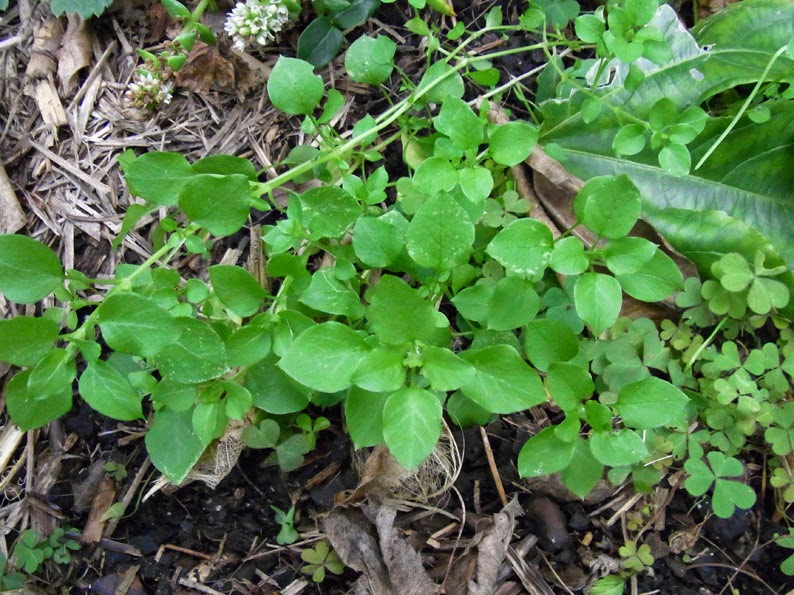
This typical baby seedling could be one of many thousands of
species, but as far as this patch of ground is concerned, it's probably
either a chickweed baby or a parsley baby. But it's too early to tell...
With its second set of little crinkly leaves appearing, this guy is
showing distinct signs of curly parsleyness. It can stay!
Uh…ohhh. Once this bub has sprouted its second rung of leaves
it has revealed itself to be the start of a smothering, spreading
chickweed, the bane of this garden bed's existence. It cannot stay!
If you are wondering "what is chickweed?" this is the stuff.
Spreads like a rumour, thrives on neglect and loves wet weather
(when the gardener is inside reading books). I'll never get
rid of chickweed, all I can do is limit its spread by hand-weeding.

The reason for this blog posting is simply that I have been trying to establish some little green herby borders here and there by spreading seed generously in a line and waiting for them to come up. It sounds like a nice idea, and it will look good in a few weeks from now, but sowing seed in a line along bare ground just invites weedy seeds to set up shop as well. While there's not a lot to do with these herby borders after you sow the seeds, apart from some watering, the main job is weeding: keeping the uninvited intruders down in numbers so the 'wanted' herbs can get established. The parsley border is in front of what should soon turn into Pammy's flowering poppy patch. 

This is my chervil border, which is coming
along nicely in a line in front of our gardenias.
I love chervil, both in the garden and in the
kitchen. It can be a bit weedy if it likes your
garden's soil and climate, and it does pop up
here and there, but it's always so pretty.
The unseasonably warm weather we had in May
ruined my first crop of coriander, which bolted to
seed in the heat. This second crop, a mini border
in front of a vegie patch with shallots and lettuce
all doing well, is loving the cooler, wetter winter
weather and should last until spring.
Last night I was talking with some good friends who have just had their front and rear gardens professionally designed and planted, and they look great already. However, the dreaded onion weed is coming back up already, marring the effect of their beautiful new plantings. Talking with them about controlling onion weed (a never-ending task, in my opinion) reminded me how much time I spend in the garden just pulling weeds. Hardly exciting work, but if you take on a garden, you need to embrace the seemingly dreary work of weeding at the same time.

I say "seemingly" because I view weeding as "thinking time". There's something about simple drudgery, like washing up or weeding, that I actually like doing. While my hands are busy doing a simple task, I find I often think of story ideas, blog posting ideas, and plan out my days and weeks ahead. Maybe I'm a bit odd, but I really don't mind weeding at all. As long as there's not too much of it, that is...


Saturday, March 8, 2014

The changeover season


Every move you make here in Sydney at the moment, you sweat. It's sticky. On these uncomfortably humid, end-of-summer days, the weather forecasters endlessly repeat their "chance of a shower" chant each morning, and that means it's very warm and humid, mostly sunny all day, then in the late afternoon there's rain or, if we're lucky, a storm as well.

While it's not my favourite time I year (the humidity knocks me around more and more as I get older), I do enjoy this season because it's time for the changeover from the spring/summer crops, to the autumn/winter plantings in the vegie patch. Rip out the old crops, plant new ones. That's what I call fun.

So the garden looks like a mulch farm at the moment, with not much to show for all the effort, but I do like digging soil. That's one of the best bits about gardening. Digging over soil. I also enjoy adding a bit of dolomite lime to sweeten the soil's pH, then working in some cow manure and compost to give the worms and all the other soil-borne critters a treat. At the end of it all, smooth over and level the rich dark soil, stand back and admire your work... 

The digging takes some time, the planting seems to be over in minutes. I've been a bit lazy this time round. Instead of conscientiously raising everything from seed I went down to the garden centre and bought some punnets of seedlings. I've sown seeds, too, but only here and there. Here's how things are going, in the Changeover Season of autumn 2014.

Wild rocket in front, lettuce (raised from seed)
behind. The wild rocket is the serrated-leaf kind
seen most commonly in shops. It's a perennial
plant that should last some time here. It's a much
better bet as a garden plant than the ultra-fast
growing annual type of rocket. Mind you, baby
annual rocket (with the rounded leaves) is still
my favourite rocket to eat, but it's so much work
to sow, re-sow, re-sow, re-sow. Eventually I
tire of the effort, and give it a rest. At least
with this wild rocket you get an easier supply.
Here's the mulch farm. There are spinach seedlings in the
centre, spring onions as well, perpetual spinach on the left.
The perpetual spinach will crop well until spring and is one
of my favourite leafy greens. The English spinach is much
shorter-lived, but it is so nice in Japanese cuisine. The big
leafy greens on the left are more chicory plants, and they are
another excellent leafy green that we turn into Greek-style
horta, boiled greens dressed with olive oil and lemon juice.
There is such a thing as too many Thai limes. They're falling
off the tree now. It's a wonderful choice if you're wondering
which citrus to grow in a pot. It reaches a bit over 1m tall
and wide and seems quite hardy, too. Just brushing past the
leaves or the fruit is such a fragrant thing to do.
Huge, green and unproductive. I've tried watering in some
sulphate of potash to stimulate flower production on our
18-month-old passionfruit vine. No luck. Plan B is do nothing
at all. Pretend it's not there. It's a bit hard to do when it
is so huge, so it's now my 'elephant in the room' plant.
  
At least the lemon tree is flowering its head
off. It smells lovely in the still morning air,
and hopefully the recent rains and the big
dose of chicken poo I gave it will restore it to
health and happiness.
Have you ever anxiously watched a plant, hoping
it would flower in time for the big Sunday lunch
that you've invited some friends to? Well, our
Tibouchina 'Jules' is letting us down. It has
18 hours left to burst into purple glory by midday
tomorrow. Otherwise it's just another green blob
in our very green blob of a garden. Healthy, yes.
In flower, not yet. 
As for the things I can't show you, I have sown more seeds of collard greens, as these big cabbage-family leafy greens were such a success over spring and early summer. They're meant to be even better in the cooler months, so here's hoping that's true. And I have also sown a few rows of seeds of the love-in-a-mist (Nigella) seeds I collected in midsummer, following the end of its spring flowering. 

The first of the collard green seeds are already up, after only five days in the soil. The Nigella seeds are on a more leisurely schedule. They'll appear in a couple of weeks, and the flowers won't do their thing for at least another six or seven months. I can wait. It's one of the very nice things about growing plants from seed. They offer the chance to share in a full life-cycle, especially if you harvest the seeds at the end of it all. I like that idea.


Saturday, November 10, 2012

Weedling or seedling?


All I have to show for a few hours of effort in the garden today is a thoroughly soiled pair of gardening jeans, especially around the knees. Weeding, the never-ending story.

In the middle of one patch of ground, I spotted this little fella coming up. "Are you a weedling or a seedling?" I wondered.

This being the spot where I sowed Florence Fennel seeds for
this first time about 10 days ago, there was every likelihood
this was a Florence Fennel seedling. But how very helpful of
the little tacker to come up with his distinctive Florence Fennel
seed attached. Coming out with its hands up..."Don't shoot!"
At this so intensely weedy time of year there are weedlings and seedlings coming up everywhere, and with crops that I've never grown before I always have that moment of hesitation when I think "Is that you?" upon spotting growth where I have planted seeds. 


Sunday, May 3, 2009

New crops


There's a number of different shops where it's unsafe to leave me unsupervised. Bookshops are one. Garden centres are another. The wonderful thing about books is of course that there's always room somewhere at home for yet another book, even if the shelves are chockers. However, in a small garden like mine the competition for space is fierce, and there are precious few vacancies for impulse buys.

So these days I'm more likely to come home with a new packet of seeds. They don't take up much space, they're cheap, and I don't have to plant them straight away, either. And that's why my old biscuit tin in the garden shed is crammed with a ridiculous number of seed packets. It's only a minor vice, I tell myself. And besides, every now and then I sow some seeds, just to make my little foible seem like respectable forward planning, which it's not.

Seeds of lettuce, silver beet, shallots, spinach and coriander were sown four weeks ago in a motley collection of leftover punnets and other containers.

The lettuce won the race to be first seeds up after the big Saturday sowing. The following Tuesday they set a blistering pace in the ideal autumn conditions.

Unfortunately, I became very busy with work since sowing the seeds back then, and the little seedlings just grew and grew, thanks mostly to the steady showers of April. They were not quite neglected, but almost, and definitely were ready to be transplanted this weekend. This is a little pot of what are called 'shallots' here in Sydney, although others might think of them as green onions or scallions. Anyway, they're the long, straight, thin oniony things that are white in their lower third, green at the tops. A good row of these is now in the ground.

Similarly neglected and well overdue for thinning, this mixture of baby lettuce looks pretty. While some of them are destined for a friend's garden, there are so many I've popped a few in a pot for myself as well.

Ditto the coriander (cilantro or Chinese parsley) plants. There are too many for my friend's little patch, so I potted up a couple for myself as well. Coriander is at its best as a winter herb here in Sydney. In summer's heat it bolts from leafy to seedy far too willingly, to the point where growing it in summer is a bit of a lost cause unless you're collecting the seed. Plants raised now, in May, when things are cooling down, can last happily leafy for a couple of months in our mildly cool version of winter here in Sydney.

In another spot in the garden a little patch of lettuce, English spinach and pak choy is progressing nicely. At around this stage it's a good idea to sow some more pak choy seed, as these plants will be ready to harvest in about three or four more weeks. And, miraculously enough, I've remembered to do this!

The cute willow tower which served me well as a frame for climbing beans last summer is back in business, this time as a frame for climbing peas. I've chosen a dwarf variety which will reach about 60cm tall, so says the seed packet. In summer I made the mistake of believing that the climbing beans would obediently listen to their seed packet and stop growing at the 1.5m mark, which is the height of the willow frame. Honestly, those abundant beans would have climbed twice that height. So, I figure, even if the dwarf peas go berserk, surely they won't outgrow the frame? Time will tell.

Thought I'd slip in a photo of a lemon flower, given that I'm blogging about new crops. Sure, it's a slow crop, but lemons are lightning-quick compared to my last crop for this blog...

My slowest crop of all, but I think I can report some progress, that is if "it hasn't died yet" can be regarded as progress. This dramatic looking chap is a pineapple plant that is now eight months old. That means I probably only have another 12 to 18 months to go to get my magnificent crop of precisely one pineapple. I've raised him in the time-honoured fashion of planting the top of a shop-bought pineapple (did this last spring) into potting mix. It took a while to do anything but progress has been good in the last three months, with a spot of light feeding helping things along. Sydney is about 1000 km south of the ideal pineapple growing climate, but I've been assured that it will produce fruit, just more slowly than its brethren further north, in subtropical Queensland.

It's so nice to get out into the garden again! The autumn weather here in Sydney is the nicest time of year in our fair city. The mornings might be a bit cool, so too the evenings, but the days are lovely, around 20°C a lot of the time. We've had above-average rain in April and the soil is in great condition. It was so frustrating to be tied up with working on weekends, madly writing my allotted 25,000 words as part of a book project into which I was conscripted. All that's over now, praise be, and so I can get back to what weekends were designed for – gardening in this beautiful climate!