Showing posts with label Lebanese cucumber. Show all posts
Saturday, November 25, 2017
The sweet spot
Labels:
basil,
Blackjack zucchini,
dill,
growing vegetables,
Lebanese cucumber,
Lebanese eggplant,
Lebanese zucchini,
Lettuce,
silver beet,
spring vegetables
Stepping out into the garden this fine late November morning, I was struck by what a sweet spot the garden is in at the moment. Everything is growing well, all the vegie crops are already being picked and producing more every day, and all the woes of a Sydney summer seem like they're an eternity away. Late spring is just about the perfect time of year to be a gardener in this part of the world.
As is my custom, here's an iPhone "Panorama" shot taken 10 minutes ago of all the happy campers in their park.
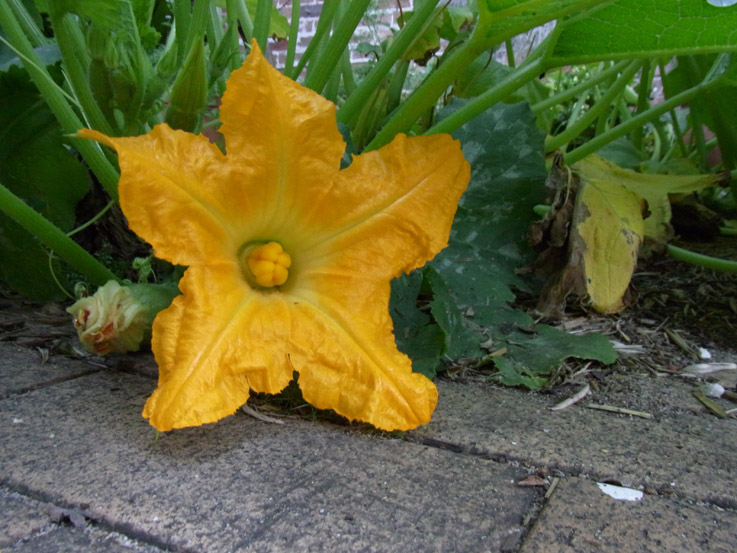
I'm often struck by how different the human eye is from a camera. From inside our house, looking out, this big yellow star of a zucchini flower is what catches your eye. It said to me "if you don't come out with your camera and take a photo of me, you're missing out". And yet in the panorama above you can barely notice it.
This is the first year I have grown Lebanese zucchini, and they're different from the more conventional 'Blackjack' zucchinis which I tend to grow most years. For one thing, as you can see here, the plants are very susceptible to powdery mildew, but this doesn't affect the crops. In fact, this light dusting of mildew almost looks nice. I'm sure it'll end up being much worse, and I'll pull the plants out prematurely in midsummer, but right now, in this late spring "sweet spot" I can live with spotty leaves.
Zucchini flowers don't last long, but they are fun, and besides, you can always fill them up with ricotta cheese and herbs, coat them in tempura batter and do some fancy dining with them.
The reason I'm growing these pale green Lebanese zucchini is mostly just to try something different, but also because I think these smaller zucchinis have a better flavour than the bigger, dark green ones.
"Lebanese" this, "Lebanese" that: it's an accidental theme this year, and here's my Lebanese eggplant looking young and healthy. Lots of flowers but no fruit yet. They'll appear in summer.
But wait, there's more! Lebanese cucumbers, too, climbing up my frail, spindly teepee of skinny bamboo. These things don't merely "crop", they "glut". We've already harvested several and have given a few away, but fortunately Pammy loves snacking on little bits of chopped up cucumber, so she's my main customer.
It's taken a while to turn a dozen or so tiny little mixed lettuce seeds into this delicious salad starter pack, but the idea of having a nice mixture of salad greens in a pot that's within a few steps of the kitchen is working out nicely.
I haven't grown silver beet in years, but by chance I ended up with half a punnet of seedlings and in just a few weeks here they are, very big ready to go. I love cooking Indian food, and so a lot of these leaves will go into things such as a lamb or chicken saag, or a vego palak paneer.
I suspect this whole crop won't be here in two weeks' time, but right now they are looking splendid.
Call it a portent of summer pests to come, but here's the only problem popping up during this gardening sweet spot. I suspect it's slugs, because I can't find any snails nearby, but someone is munching on my pot of basil and they're having a delicious old time of it, too.
I've moved the pot to another spot and I'm on the lookout for culprits. So far no luck, and more leaves eaten last night.
Maybe it's caterpillars? In that case, in my current sweet mood of spring gardening contentment, I am adopting the benign policy of feeding our garden's future butterflies some tender young Genovese basil, and I hope they appreciate its flavour.
Posted by
Jamie
at
8:25 AM
Sunday, September 24, 2017
Small starts
Labels:
chervil,
courgette,
cucumber,
Lebanese cucumber,
Lebanese zucchini,
seedlings,
seeds,
spring vegetables,
zucchini
Last week, for just a few moments I almost succumbed to a ridiculous thought, but common sense intervened and I changed my mind.
What was the ridiculous thought? I momentarily felt guilty about starting off some new crops from seedlings, and for just a minute or two headed for the seed stands at the garden centre, instead of wandering outdoors to where all the seedlings were.
Fortunately, a cluster of sensible brain cells rallied and told me to stop being a fool, go buy those nice, healthy seedlings and save yourself four weeks of fussing over seeds in punnets. And that's what I did. I bought a punnet of four Lebanese zucchini seedlings, and a punnet of four Lebanese cucumber seedlings. And now they're planted and they look great.
Growing crops from seed is fun, but you should never feel it is compulsory. I enjoy doing it partly because of the pleasure of growing something from seed, and also partly because the only way to grow rare or unusual varieties is to start them from seed. Your basic average garden centre has an extremely limited range of seedling varieties to choose from, while an Internet full of online seed catalogues has hundreds, sometimes thousands, more seeds to choose from.
Fortunately for me, I like the smaller, light green Lebanese zucchini very much, and there was a perfectly healthy punnet of four of the things just begging to be planted. As many people like to say these days, it was a no-brainer.
Planted 60cm apart into soil enriched with compost and chicken poo. A layer of mulch, some seaweed solution to water them in, and the job was done in no time.
However, the next photo shows a bunch of baby seeds coming up, and that's because this is the best way to grow some plants. This one is yet another crop of chervil, a delicate herb that looks a bit like downsized parsley, with a lightly aniseedy flavour that goes beautifully with vegetables such as zucchini.
Chervil is a relative of parsley, and like parsley it prefers to start life in the garden as a seed sown directly where it will spend its life. Chervil, parsley and several other common vegie and herb crops absolutely hate being transplanted from a starter pot to the ground. It can be done, and is regularly done, but the plants are rarely happy about it.
Speaking of plants which are related to each other, this Lebanese cucumber seedling does look remarkably similar to the zucchini seedling at the top of this page, and that's because both plants are cucurbits. There are almost a thousand cucurbit species, and the best known other cucurbits to ordinary gardeners are all the pumpkins, melons and gourds.
Cucumbers like to twine and climb, so I have used five slender bamboo stakes to form a teepee for the cucumbers to climb up. The bamboo stakes were quite long, and they all poke about 15 inches (38 cm) down into the soil. The first really windy day will test how strong the structure is, I guess.
I have planted all four seedlings, which is too many, so I plan to let them race up the teepee, and whichever seems the healthiest plant will be the one that remains.
And so here we have some small starts, two from easy-peasy seedlings, and one crop from seed. It certainly is much less work than getting all three crops started from seed ... a much more sensible way for an old gardener to go about a bit of amateur backyard farming.
Posted by
Jamie
at
1:46 PM
Friday, December 30, 2016
In a pickle with a glut of cucumbers
Labels:
agurk salat,
cucumbers,
dill pickles,
Lebanese cucumber,
pickles,
refrigerator pickles,
sweet Danish pickles
It seems like it was only weeks ago that I posted a blog about my newly planted little "Cutecumber" cucumber plants. And that's because it was only four weeks ago! My, how this thing has grown in our summer sunshine, and now it is producing Lebanese type cucumbers at an astonishing rate. Right now, I'm bringing in two cucumbers a day, and though Pammy is a world-class cucumber snacker, she's falling behind and the cucumber glut in our fridge crisper cabinet is growing.
The plant's label said "90-150cm" but I think that's the daily growth rate ...
Mind you, it's a handsome thing right now. A month from now, as February's deadly, oppressive humidity starts to hit, this lovely green foliage will probably be dusted with powdery mildew, despite my best organic efforts to prevent it.
Half the trick with harvesting the cucumbers is actually finding all of them. The plant's growth is so lush, meandering and complex that it's easy to miss fairly large cucumbers. Our lunch guests on Christmas Day managed to spot three cucumbers I hadn't noticed.
With all this excess produce mounting up (even after giving several away) there was only one way to cope: make pickles. And so that's what I did today. I've made two different types of pickles. One is a Sweet Danish Pickle which I've made a few times before and which I really like. The other is my first attempt at dill pickles. It's too early to know whether that batch has worked, so stay tuned.
In the meantime, here's the basics of the Danish Sweet Pickles ...
After washing three cucumbers, finely slice them. That white thing in the photo is a Zyliss slicer, which is hellishly nerve-wracking to use because it's so sharp, but if you are very careful and follow the safety guidelines, it makes quick work of three little cucumbers. Each slice is very thin, about 1-2mm.
As you transfer the slices to a bowl, sprinkle over some sea salt flakes. I added the cucumbers in about 3 layers, salting each layer as I went. Leave them to soak for 10-15 minutes.
Meanwhile, make the pickling liquid, which is 1.5 cups white wine vinegar, half a cup of sugar, 5 bay leaves, 1 teaspoon yellow mustard seed, and 1 teaspoon of whole black peppercorns. To mix this up, just add the sugar to the vinegar in a few batches, stirring with a fork until the sugar dissolves. No heat is necessary, and the whole thing takes about 1 minute. So easy!
Next, rinse the salted cucumber slices under running water to remove the salt, drain in a colander, then gently squeeze dry. Divide the cucumbers into two small, sterilised jars, or pop them into one large sterilised jar.
Next, add the pickling liquid, along with the bay leaves and spices, to each jar (if using two). Seal the lids, pop them into the fridge and they are ready to eat by the evening (presuming you made them in the morning). Talk about easy.
If you think half a cup of sugar is way too much, the original recipe used one whole cup of sugar. I've experimented with 1/3 cup, 1/4 cup and I think 1/2 cup suits my tastebuds.
The original use for these pickles is as a "pickled cucumber salad" (agurk salat) to go with Danish pork and veal meatballs, called Frikadellers. While I still use them for that dish, these pickles are wonderful as part of lunchtime sandwiches, too.
Finally, the big experiment that has yet to end ... my first attempt at classic dill pickles. Now, the first thing I have learnt about this recipe is that there are only about a zillion dill pickle recipes out there (all authentic, of course).
The second thing I've learnt is that there is such a thing as "refrigerator" dill pickles, which means you can make up a little batch in a jar and pop them in the fridge. Wait a few days and they should be ready.
I am definitely not ready for Advanced Industrial Pickling yet — with all those scary jars with exploding sealed lids sitting in big pans of boiling water. So I like this idea of "refrigerator" dill pickles, it's far more peaceful. Here's what I did.
Sterilise the jar in boiling water, and wash three cucumbers. Slice off the ends of each cucumber, then slice lengthways into batons that are about one inch shorter than the jar.
Next, make up the pickling liquid, which is 1.5 cups water mixed with 1.5 cups apple cider vinegar, 2 tablespoons sea salt flakes, and 1 teaspoon sugar. Add this to a saucepan, heat this until the sugar and salt have dissolved, let it come to a gentle simmer, then turn off the heat and leave it all for half a hour to cool down.
To the bottom of the jar, add 1 peeled clove garlic, a sprig fresh dill and 1 teaspoon pickling spices mix (these are sold here in Oz in packs which contain mustard, peppercorns, allspice and dill seed). Then carefully stuff the jar full of cucumber batons.
By the way, there is an alternative method for making these same refrigerator pickles, and the main difference is that you pour the very hot, simmering pickling liquid into the packed jar of cucumbers, then you let that cool down completely before refrigerating the jar. I wouldn't have a clue if that works, but I suspect it does because there's half a zillion recipes online which say to do it that way.
In the meantime, I hope 2017 is a very much better year for you than 2016 was, and I look forward to letting you know the exciting conclusion to my pickling experiments early in the New Year. See you then!
Posted by
Jamie
at
1:56 PM
Wednesday, November 17, 2010
Crunchy munchies
My girl Pam likes her healthy snacks: carrot sticks, celery sticks and cucumber sticks. (I think all this health food puts the cosmic balance of our house out of whack, so I balance things out with Peanut Butter on toast.) Simply because I have never grown cucumbers before, I decided that I would have a go at providing Pam with some home-grown healthy crunchy munchies in the form of some Lebanese cucumbers.
Now, before you start hitting the comment button with "you're doing it wrong, Bozo" comments, yes I know I should be growing them up a trellis of some sort. The problem is that I've run out of space for trellises, and my vegie growing books say you can grow them along the ground, if you plant them into a raised mound. So that's what I'm doing. After a slowish start in October, rainy November has been just what the cucumber plants wanted.
The first of them is almost ready to harvest already. Naturally enough I've sown the cucumbers into soil enriched with a stack of home-made compost and generous handfuls of pelletised chicken manure. Cucumbers love their 'good going' so I hear.
While not spectacular the cucumber flowers are plentiful, cheerful and a pleasing sunny yellow for the brief time they appear.
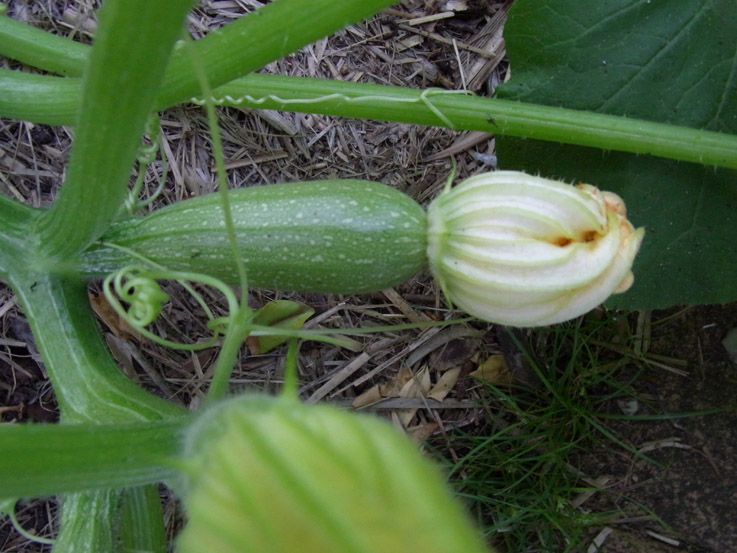
Behind most of the flowers you can see the baby cucumbers already forming. No doubt we will end up with a glut, and so anyone coming over to our place will probably find some Greek-style Tzatziki dip on the table (for the recipe, see below).
"Where's my trellis, man?" asks the seeking tendril. Sorry bud, hit the low road, you're a groundcover plant this time round. While growing cucumbers on the ground definitely isn't recommended, I think I should be able to keep the fruit looking good by being attentive to keeping fresh straw mulch beneath the developing fruits. We'll just find out whether this works or not over the next few weeks, I guess.While the wet weather is a blessing at the moment, it also threatens the usual curse of powdery mildew fungal attack which affects all the cucurbits such as cucumbers, zucchinis, marrows, squash, melons and pumpkins. This time round I'm using a new organic product called Eco-Fungicide. As far as I understand it, it's basically glorified bi-carb soda, but I've been told it works. You need to mix up a batch and use it all that day (it doesn't store), and that means adding a spoonful of the powder to water, along with a thimble full of vegetable oil or horticultural oil. So far so good - no powdery mildew on the plants, so it seems to work well. Last year I used the home-made organic solution of watered-down milk sprays, and these worked fairly well but you had to respray constantly, and it was a bit of a hassle to stay on top of the problem.
Finally, a recipe. Tzatziki for cucumber gluts.
1. Peel, deseed and grate 1 cucumber. Leave the grated cucumber to drain in a colander for 15 minutes, then squeeze out any remaining juice in your hands.
2. Mix the drained cucumber into 250g thick Greek plain yoghurt, then add 2 tablespoons extra virgin olive oil, 1 tablespoon white wine vinegar, 1 tablespoon chopped fresh mint, crushed garlic to taste*, salt and pepper to taste.
Tzatziki is nice as a dip with bread or crackers, but it's also great dolloped on the side when serving barbecued meats, seafood, chicken etc.
* As for 'garlic to taste', real Greeks would add at least 4 cloves of crushed garlic to their Tzatziki, while lots of non-Greeks would think 1 clove of crushed garlic is probably a bit too much. So I'll leave the exact amount of crushed garlic up to you. I'm a 1 clove wimpy Anglo boy myself. I find too much garlic ruins the refreshing zing of this dish, with its tangy mint, vinegar and yoghurt flavours. But try to tell a Greek that too much garlic ruins it!
Posted by
Jamie
at
8:10 AM
Subscribe to:
Posts (Atom)